Common Registration Assessment, Part 1
Loading dose and volume of distribution
Dose equals volume times concentration. Three original questions on a loading dose and the volume of distribution.
Published 6 October 2026. Independent revision material, not GPhC questions, not for patient care.
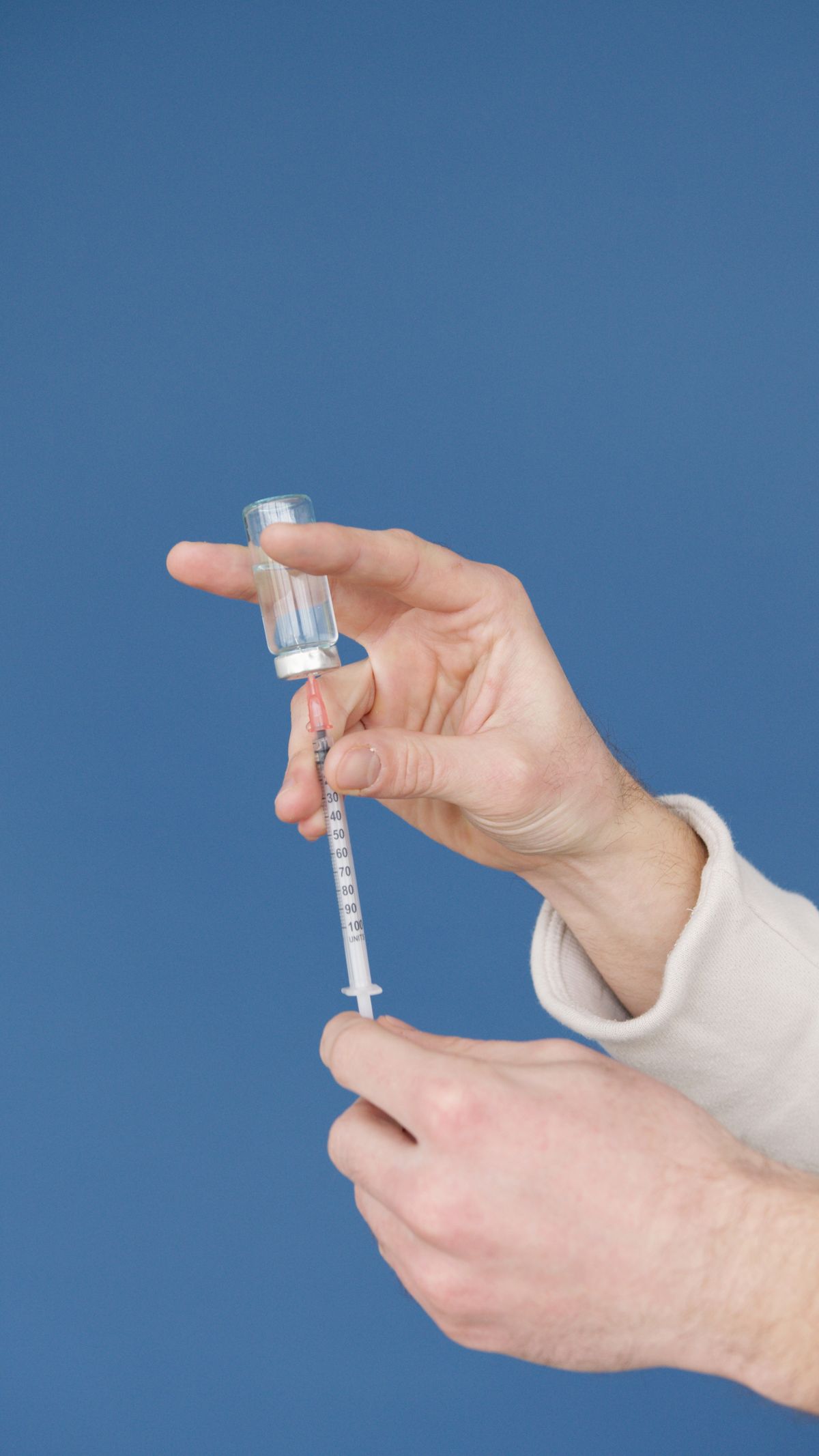
Pharmacokinetics was another of the Part 1 areas named in the June 2026 key insights. The Pharmaceutical Journal's back to basics article compares a loading dose with filling a flask: the dose is the volume multiplied by the concentration you want.
If you know the dose and the measured concentration, the same relationship gives you the apparent volume of distribution. The article's example is a 100 mg intravenous bolus that gives 10 mg/L, so the volume is 10 L.
The method
- Write the relationship as dose = volume of distribution (V) × concentration.
- Find V in litres, from V per kg multiplied by weight if needed.
- Multiply V by the target concentration for the loading dose.
- Keep the units consistent: mg with mg/L, micrograms with micrograms/L.
Three practice questions
Work each one on paper first, then open the answer. All drugs and patients are fictional.
Question 1
A drug has a volume of distribution of 0.5 L/kg. What loading dose gives a target concentration of 12 mg/L in a patient weighing 70 kg? These figures are made up for the exercise.
Show the answer
Answer: 420 mg
Working: V = 0.5 × 70 = 35 L. Dose = 35 L × 12 mg/L = 420 mg.
Question 2
A 200 mg intravenous bolus gives a measured plasma concentration of 8 mg/L. What is the apparent volume of distribution? These figures are made up for the exercise.
Show the answer
Answer: 25 L
Working: V = dose ÷ concentration = 200 mg ÷ 8 mg/L = 25 L.
Question 3
A drug has a volume of distribution of 7 L/kg. What loading dose in micrograms is needed to reach 1.2 micrograms/L in a patient weighing 60 kg? These figures are made up for the exercise.
Show the answer
Answer: 504 micrograms
Working: V = 7 × 60 = 420 L. Dose = 420 L × 1.2 micrograms/L = 504 micrograms. That is 0.504 mg, so check the unit the question asks for.
What the article says
The article shows how a measured concentration gives the volume of distribution, and how a typical volume and a target concentration give a loading dose, using phenytoin in status epilepticus as its example. The drugs and values on this page are invented for practice and are not dosing guidance.
Where marks are lost
- Forgetting to multiply V per kg by the patient's weight.
- Mixing mg dose with micrograms/L concentration.
- Dividing instead of multiplying when finding the dose.
Frequently asked questions
What is a loading dose for?
The article says it brings the concentration up to the therapeutic range quickly, in acute conditions or for drugs with a long half-life.
Is volume of distribution a real volume?
No. It is the apparent volume the drug would need to occupy to give the measured concentration.
Sources
- The Pharmaceutical Journal, back to basics: pharmacokinetics
- GPhC, Common Registration Assessment specification and permitted items for 2026
The questions above are original and use fictional drugs. PreRegExamPrep is not affiliated with or endorsed by the General Pharmaceutical Council.
Practise until the method is automatic
Try 15 free questions with worked answers. No sign-up required.
More calculation topics
- Dose by weight calculations for the GPhC assessment
- Volume to give: liquid medicine calculations
- Percentage strength calculations: w/v, w/w and ratios
- Dilution calculations with C1V1 = C2V2
- Infusion rate calculations in mL per hour
- Drip rate calculations: drops per minute
- Body surface area calculations
- Creatinine clearance (Cockcroft-Gault) calculations
- Moles and millimoles calculations
- Displacement volume calculations for reconstitution
- Quantity to supply calculations
- Using a provided formula in calculations
- Dose information from packaging and labels
- Diluting a stock to a lower strength
- Medicine cost and switch calculations
- Rounding rules in calculations
- Enteral feed rate calculations
- Electrolyte content over time
- Infusion dose per kg per hour
- Rounding doses to measurable volumes
- Relative risk and relative risk reduction
- Absolute risk reduction and number needed to treat
- Odds ratio and confidence intervals
- Relative versus absolute risk reduction
- Top-up doses from measured drug levels
- Salt correction factors
- Mass and molar drug concentrations
- Half-life and falling drug levels
- Steady-state concentration and infusion rate
See also the formula sheet, the eight sample questions and the approved calculator page.