Common Registration Assessment, Part 1
Melatonin slow-release tablet counts and courses for the GPhC assessment
Three original practice questions, with the working shown. Read the stated prescription or plan before calculating.
Published 25 October 2026. Independent revision material, not GPhC questions, not for patient care.
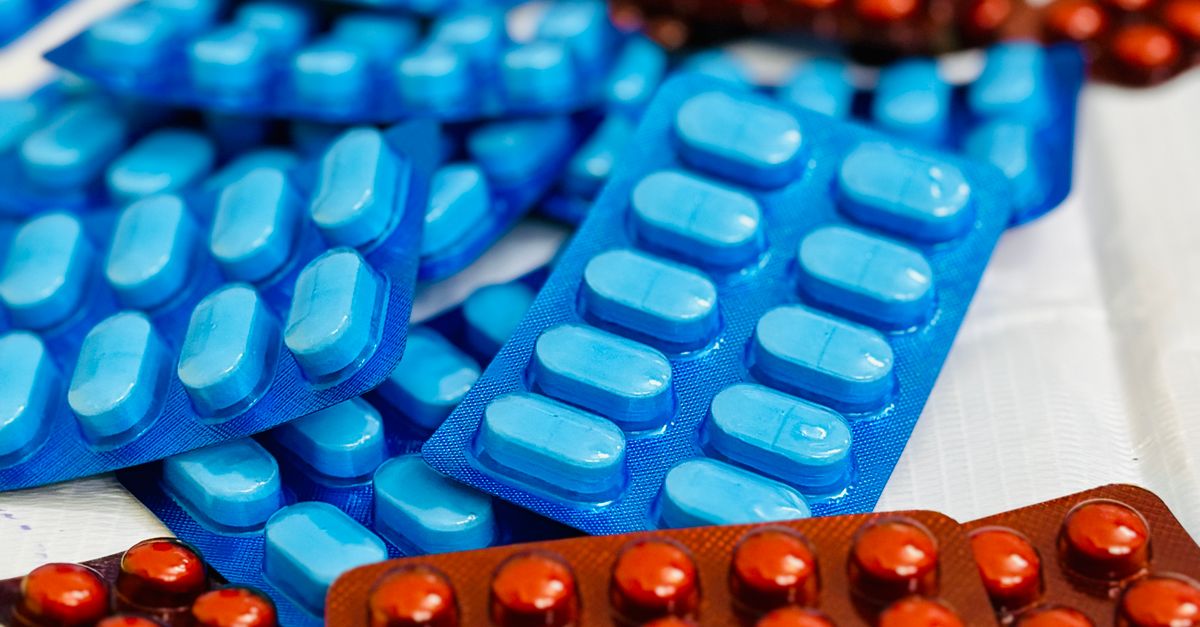
The NHS lists melatonin as 2 mg slow-release tablets; the usual dose is one tablet taken 1 to 2 hours before bedtime.
The BNF short-term course for insomnia is 2 mg once daily for up to 13 weeks; the NHS lists a maximum of 5 tablets (10 mg) once daily where a specialist adjusts the dose.
Each question fixes the values needed for its arithmetic. Write the unit beside every step and distinguish a single dose from a daily total or course supply. All prescriptions and patients here are fictional; these are revision materials, not for patient care.
The method
- Identify the exact formulation, strength, dose and frequency supplied in the question.
- Convert an X mg/5 mL strength to mg/mL if a dose-to-volume conversion is needed.
- Calculate one dose first; for tablets or capsules divide prescribed mg by mg per unit.
- Scale to the stated frequency and duration only when a total quantity is requested.
- Apply whole-container or complete-day rounding only if the question specifies it.
Three practice questions
Work each one on paper first, then open the answer. All patients and prescriptions are fictional.
Question 1
A fictional prescription specifies melatonin 2 mg each night for the maximum 13 weeks, using 2 mg slow-release tablets. How many tablets cover the course?
Show the answer
Answer: 91 tablets
Working: 7 nights × 13 weeks = 91 nights; 91 × 1 tablet = 91 tablets.
Question 2
A fictional plan is melatonin 2 mg each night for 28 nights, using 2 mg slow-release tablets. How many tablets cover the course?
Show the answer
Answer: 28 tablets
Working: 1 tablet × 28 nights = 28 tablets.
Question 3
A fictional plan uses the maximum 10 mg once daily, using 2 mg slow-release tablets. How many tablets is one dose?
Show the answer
Answer: 5 tablets
Working: 10 ÷ 2 = 5 tablets.
NHS: How and when to take melatonin
https://www.nhs.uk/medicines/melatonin/how-and-when-to-take-melatonin/
Where marks are lost
- Using a remembered strength or schedule instead of the stated product.
- Reporting a daily total when the question asks for one dose or the course.
- Treating arithmetic as evidence that a real prescription is clinically suitable.
Frequently asked questions
Are these official assessment questions?
No. They are original revision exercises, not official GPhC questions and not for patient care.
Can a quantity calculation justify a formulation switch?
No. Follow the formulation and prescription in the exercise. Real switches and dose changes need clinical checks.
How should I check the answer?
Check the requested unit, then work backwards from the quantity to the stated dose and duration.
Sources
The questions above are original and use fictional patients and prescriptions. PreRegExamPrep is not affiliated with or endorsed by the General Pharmaceutical Council.
Practise until the method is automatic
Try 15 free questions with worked answers. No sign-up required.
More calculation topics
- Dose by weight calculations for the GPhC assessment
- Volume to give: liquid medicine calculations
- Percentage strength calculations: w/v, w/w and ratios
- Dilution calculations with C1V1 = C2V2
- Infusion rate calculations in mL per hour
- Drip rate calculations: drops per minute
- Body surface area calculations
- Creatinine clearance (Cockcroft-Gault) calculations
- Moles and millimoles calculations
- Displacement volume calculations for reconstitution
- Quantity to supply calculations
- Using a provided formula in calculations
- Dose information from packaging and labels
- Diluting a stock to a lower strength
- Medicine cost and switch calculations
- Rounding rules in calculations
- Enteral feed rate calculations
- Electrolyte content over time
- Infusion dose per kg per hour
- Rounding doses to measurable volumes
- Relative risk and relative risk reduction
- Absolute risk reduction and number needed to treat
- Odds ratio and confidence intervals
- Relative versus absolute risk reduction
- Loading dose and volume of distribution
- Top-up doses from measured drug levels
- Salt correction factors
- Mass and molar drug concentrations
- Half-life and falling drug levels
- Steady-state concentration and infusion rate
- Bioavailability and equivalent oral doses
- Oral maintenance dose and dosing interval
- Elimination rate constant and half-life
- Accumulation towards steady state
- Ratio strengths and one in X
- Serial dilution factors
- Mixing solutions of different strengths
- Tablet quantities for reducing regimens
- Equivalent doses from provided conversion tables
- Thresholds and dose-banding algorithms
- Unit conversions for mass and volume
- Units and units per mL
- Reconstituting powders and final concentration
- Millimoles and milliequivalents
- Infusion time and volume remaining
- Days supply from pack sizes
- Percentage w/v and w/w conversions
- Ideal and adjusted body weight from formulae
- Diluting creams and ointments by weight
- Scaling a formula to a batch size
- Age-band doses from a provided table
- Tablet fractions and split doses
- Stones, pounds, inches and metric conversions
- Micrograms per minute from mg per hour
- Percentage change and mark-up
- Molar solutions and mass per volume
- Osmolarity from component concentrations
- Direct proportion and cross-multiplication
- Scientific notation and very small quantities
- Stock use and reorder quantities
- Parts per million and very dilute solutions
- Sodium chloride equivalents and isotonic solutions
- Density and specific gravity conversions
- Doses per day and hours between doses
- Finding the volume of diluent to add
- Capping a dose at a stated maximum
- Whole vials and ampoules to draw up
- Reading values from a provided graph
- Micrograms per kg per minute infusions
- Percentage composition of a compound preparation
- Suppository displacement values
- Isotonicity by freezing point depression
- Energy content of parenteral nutrition
- Syringe driver rate calculations
- Area under the curve calculations
- Renal dose adjustments using provided bands
- Insulin units and infusion calculations
- Working backwards from a stated dose
- Doses and days from multi-dose devices
- Combined additives in one infusion
- BMI calculations for the GPhC assessment
- Fewest tablets to make a dose
- Clearance from half-life and volume of distribution
- Maintenance fluid requirements by weight
- Sodium load from effervescent tablets
- Ethanol content of liquid preparations
- Oxygen cylinder duration calculations
- Urine output and fluid balance calculations
- Quantities for titration packs
- Infusion line priming and dead space
- Alcohol unit calculations for the GPhC assessment
- Paracetamol syrup calculations for children
- Ibuprofen liquid calculations for children
- Vitamin D conversions for the GPhC assessment
- Ferrous sulfate drops and tablet calculations
- Amoxicillin liquid and capsule calculations
- Folic acid dose and quantity calculations
- Adult paracetamol and the daily maximum
- Calcium and iron intake calculations
- Salt limit calculations by age
- Fingertip unit calculations for the GPhC assessment
- Adrenaline dose calculations for anaphylaxis
- Breakthrough opioid dose calculations
- IV fluid bolus calculations in children
- Neonatal maintenance fluid calculations
- Enoxaparin dose calculations by weight
- Levothyroxine dose by weight calculations
- Methotrexate weekly dose calculations
- Sensitivity, specificity and predictive value calculations
- Hypertonic saline bolus calculations in children
- Prednisolone tablet and liquid calculations for the GPhC assessment
- Cetirizine liquid volume and supply calculations for the GPhC assessment
- Lactulose dose and bottle supply calculations for the GPhC assessment
- Metformin tablet and liquid strength calculations for the GPhC assessment
- Flucloxacillin capsule and course supply calculations for the GPhC assessment
- Clarithromycin liquid strength and formulation calculations for the GPhC assessment
- Senna tablet and syrup quantity calculations for the GPhC assessment
- Nitrofurantoin formulation and course quantity calculations for the GPhC assessment
- Aciclovir five-times-daily course calculations for the GPhC assessment
- Oral rehydration fluid deficit calculations for the GPhC assessment
- Warfarin tablet strengths and daily doses for the GPhC assessment
- Digoxin microgram tablets and daily doses for the GPhC assessment
- Co-amoxiclav tablet courses and liquid shelf life for the GPhC assessment
- Phenoxymethylpenicillin age band doses and liquid strengths for the GPhC assessment
- Cefalexin capsule counts and course supply for the GPhC assessment
- Co-codamol strengths and 24-hour maximums for the GPhC assessment
- Trimethoprim tablets, liquid and course lengths for the GPhC assessment
- Macrogol sachet schedules and water volumes for the GPhC assessment
- Colchicine tablet counts and course maximums for the GPhC assessment
- Furosemide tablet and liquid strengths for the GPhC assessment
- Amitriptyline tablet strengths and daily doses for the GPhC assessment
- Ramipril titration packs and tablet strengths for the GPhC assessment
- Amlodipine tablet and liquid strengths for the GPhC assessment
- Atorvastatin tablet strengths and daily doses for the GPhC assessment
- Citalopram drops and tablet equivalents for the GPhC assessment
- Fexofenadine tablet strengths by age for the GPhC assessment
- Gliclazide standard and slow-release tablets for the GPhC assessment
- Lansoprazole capsule strengths and course lengths for the GPhC assessment
- Naproxen tablet strengths and daily maximums for the GPhC assessment
- Propranolol tablet strengths and daily doses for the GPhC assessment
- Fluoxetine capsule strengths and liquid doses for the GPhC assessment
- Simvastatin tablet strengths and evening doses for the GPhC assessment
- Losartan tablet strengths and daily doses for the GPhC assessment
- Gabapentin capsules, tablets and three daily doses for the GPhC assessment
- Montelukast tablets, chewables and granules by age for the GPhC assessment
- Salbutamol inhaler puffs and daily maximums for the GPhC assessment
- Mirtazapine tablets, liquid and bedtime doses for the GPhC assessment
- Allopurinol tablet strengths and daily doses for the GPhC assessment
- Spironolactone tablet strengths by condition for the GPhC assessment
- Doxazosin standard and slow-release tablets for the GPhC assessment
- Omeprazole capsule strengths and daily doses for the GPhC assessment
- Sertraline tablet strengths and dose steps for the GPhC assessment
- Bisoprolol tablet strengths and daily doses for the GPhC assessment
- Doxycycline capsule strengths and course totals for the GPhC assessment
- Pregabalin capsule strengths and daily doses for the GPhC assessment
- Tramadol capsule strengths and daily maximums for the GPhC assessment
- Venlafaxine tablet strengths and daily doses for the GPhC assessment
- Clopidogrel tablet strengths and supply counts for the GPhC assessment
- Bendroflumethiazide tablet strengths and daily doses for the GPhC assessment
- Tamsulosin capsule strengths and daily doses for the GPhC assessment
- Candesartan tablet strengths and daily doses for the GPhC assessment
- Apixaban tablet strengths and twice-daily doses for the GPhC assessment
- Rivaroxaban tablet strengths and daily doses for the GPhC assessment
- Escitalopram tablet strengths and daily doses for the GPhC assessment
- Duloxetine capsule strengths and daily doses for the GPhC assessment
- Indapamide tablet strengths and morning doses for the GPhC assessment
- Empagliflozin tablet strengths and daily doses for the GPhC assessment
- Semaglutide weekly injection dose steps for the GPhC assessment
- Rosuvastatin tablet strengths and daily doses for the GPhC assessment
- Codeine tablet strengths and daily maximums for the GPhC assessment
- Lisinopril tablet strengths and daily doses for the GPhC assessment
- Dapagliflozin tablet strengths and once-daily doses for the GPhC assessment
- Atenolol tablet strengths and daily doses for the GPhC assessment
- Metronidazole tablet strengths and course quantities for the GPhC assessment
- Azithromycin tablet strengths and short courses for the GPhC assessment
- Alendronic acid weekly tablets and supply for the GPhC assessment
- Carbimazole tablet strengths and titration doses for the GPhC assessment
- Hydroxychloroquine tablet strengths and weight-based maximums for the GPhC assessment
- Bumetanide tablet strengths and daily doses for the GPhC assessment
- Fluconazole capsule strengths and single doses for the GPhC assessment
- Sitagliptin tablet strengths and once-daily doses for the GPhC assessment
- Valsartan tablet strengths and daily doses for the GPhC assessment
- Ciprofloxacin tablet strengths and twice-daily courses for the GPhC assessment
- Sumatriptan tablet strengths and repeat-dose maximums for the GPhC assessment
- Morphine sulfate oral solution volumes and 4-hourly doses for the GPhC assessment
- Carvedilol tablet strengths and titration steps for the GPhC assessment
- Ezetimibe tablet strength and once-daily doses for the GPhC assessment
- Quetiapine tablet strengths and titration days for the GPhC assessment
- Loratadine tablet strength and once-daily doses for the GPhC assessment
- Baclofen tablet strengths and three daily doses for the GPhC assessment
- Paroxetine tablet strengths and morning doses for the GPhC assessment
- Nortriptyline tablet strengths and nightly doses for the GPhC assessment
- Zopiclone tablet strengths and bedtime doses for the GPhC assessment
- Diazepam tablet strengths and divided daily doses for the GPhC assessment
- Finasteride tablet strengths and once-daily doses for the GPhC assessment
- Aripiprazole tablet strengths and once-daily doses for the GPhC assessment
- Lamotrigine tablet strengths and titration steps for the GPhC assessment
- Levetiracetam tablet strengths and twice-daily steps for the GPhC assessment
- Co-amoxiclav tablet strengths and three daily doses for the GPhC assessment
- Donepezil tablet strengths and bedtime doses for the GPhC assessment
- Cyclizine tablet strengths and three daily doses for the GPhC assessment
- Promethazine tablet and liquid dose volumes for the GPhC assessment
- Metoclopramide tablet strengths and five-day courses for the GPhC assessment
- Tranexamic acid tablet counts and course days for the GPhC assessment
- Hydroxocobalamin injection loading course counts for the GPhC assessment
- Lithium tablet strengths and daily doses for the GPhC assessment
- Risperidone liquid volumes and titration steps for the GPhC assessment
- Carbamazepine liquid volumes and daily doses for the GPhC assessment
- Diltiazem tablet strengths and three daily doses for the GPhC assessment
- Prochlorperazine tablet and buccal dose counts for the GPhC assessment
- Verapamil tablet and liquid dose volumes for the GPhC assessment
- Perindopril tablet strengths and morning doses for the GPhC assessment
- Oxybutynin tablet strengths and maximum daily doses for the GPhC assessment
- Domperidone tablet counts and short courses for the GPhC assessment
- Pantoprazole tablet strengths and course lengths for the GPhC assessment
- Cefalexin capsule strengths and course quantities for the GPhC assessment
- Clarithromycin tablet strengths and twice-daily courses for the GPhC assessment
- Metoprolol tablet strengths and divided daily doses for the GPhC assessment
- Zolpidem tablet strengths and bedtime doses for the GPhC assessment
See also the formula sheet, the eight sample questions and the approved calculator page.